



In this review
Lorem ipsum dolor sit amet, consectetur adipiscing elit. Suspendisse varius enim in eros elementum tristique. Duis cursus, mi quis viverra ornare, eros dolor interdum nulla, ut commodo diam libero vitae erat. Aenean faucibus nibh et justo cursus id rutrum lorem imperdiet. Nunc ut sem vitae risus tristique posuere.
Lorem ipsum dolor sit amet, consectetur adipiscing elit. Suspendisse varius enim in eros elementum tristique. Duis cursus, mi quis viverra ornare, eros dolor interdum nulla, ut commodo diam libero vitae erat. Aenean faucibus nibh et justo cursus id rutrum lorem imperdiet. Nunc ut sem vitae risus tristique posuere.
Heading


If you're pregnant or trying to conceive, you already know prenatal vitamins are essential. And if you've been shopping around, you've probably come across Ritual Essential Prenatal. But is it actually worth it, and how does it stack up against other leading brands?
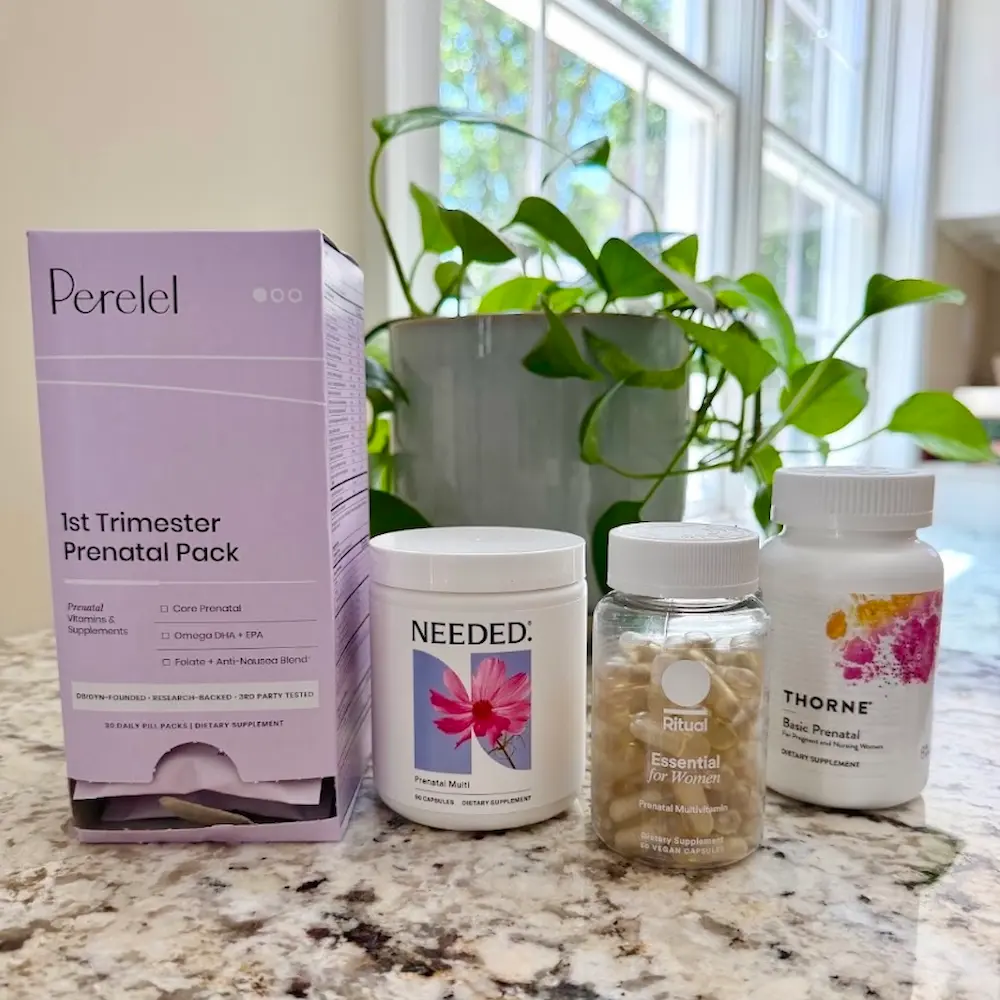
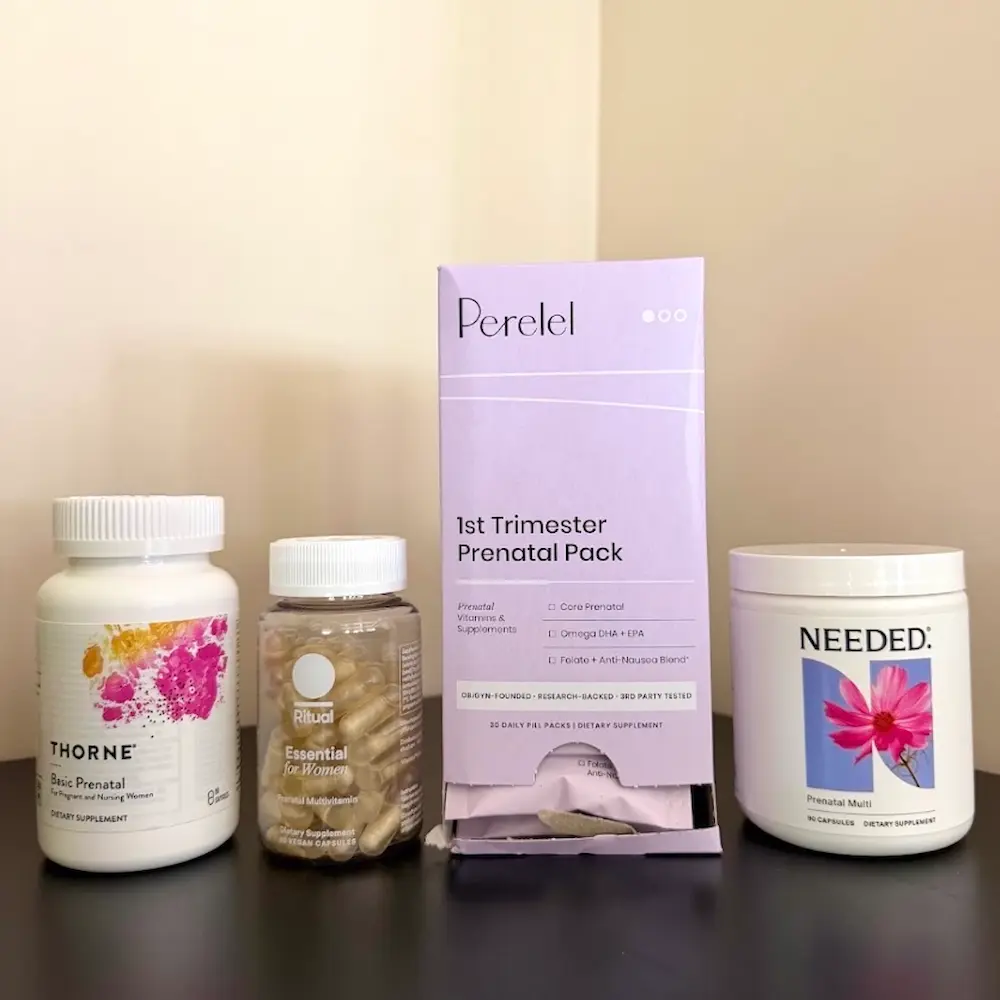
To find out which one is best, we enlisted Registered Dietitian Breanna Woods, MS, RDN. Together, we compared Ritual Essential Prenatal, Perelel Trimester Prenatal Packs, Needed Prenatal Multi, and Thorne Basic Prenatal on clinical evidence and expertise, ingredients and formulation, ease of use, quality and purity, and price and value. Read on to see which one wins.
What to Look for in a Prenatal Supplement
Prenatal vitamins help make sure you get vital nutrients to support baby's development that you may not otherwise get from food.* But new supplements enter the market every year, and because they're regulated differently from traditional pharmaceuticals,1 all the noise and product claims can make it hard to identify a good one.
According to Woods, a prenatal should “provide the nutrients pregnant women commonly lack and fill nutritional gaps.” Look for:
- Vitamin D: Important role for bone health, immune function, and inflammation.2 An estimated 90% of pregnant women in the US have vitamin D intakes below the recommended adequate intake, which helps support overall maternal health.3
- Folate: Plays a key role in fetal development and supports neural tube formation (embryo brain and spine development that take place in the first month of pregnancy).4 About one third of pregnant women in the US have intakes below what's recommended.5
- Choline: Important for nervous system development and may help neural tube formation; most pregnant women in the US do not get enough from diet, and fewer than half of prenatal supplements on the market even contain it.6
- Iron: Essential for red blood cell formation and oxygen transport in the blood 7
- Biotin: Contributes to critical steps in the metabolism of fatty acids, glucose, and amino acids.8
- DHA (Omega-3): Supports brain and eye development. Most pregnant women likely do not get get enough DHA daily so supplementation is often needed for women who don't eat seafood or other omega-3-rich foods regularly.9
Along with the right nutrients, here's what else to look for:
- Clinical validation: see if the finished product has been studied with sound study design (e.g. randomized, double-blind, controlled trials). Peer-reviewed publications are an additional signal that the research has been accepted by experts in the field. These ensure the supplement is not only safe, but effective too.
- Ingredient quality and bioavailability: ensure the forms of each nutrient are ones the body can actually absorb and use.
- Quality and purity: third-party testing, supply chain traceability, contaminant screening.
- Tolerability: is how well a supplement can be managed. This is especially important during the first trimester, when nausea is a significant factor.
Prenatal Vitamins, Compared
Clinical Validation: Ritual Wins As the Only Brand With a Gold Standard Clinical Trial
The term "clinically studied" isn't currently regulated in the supplement industry. Many brands use it when their product contains clinically studied ingredients, even though no one has studied the complete formula. Testing the finished product matters because it helps ensure the ingredients don't interact negatively and that the formula is designed to be safe and effective at the highest level.
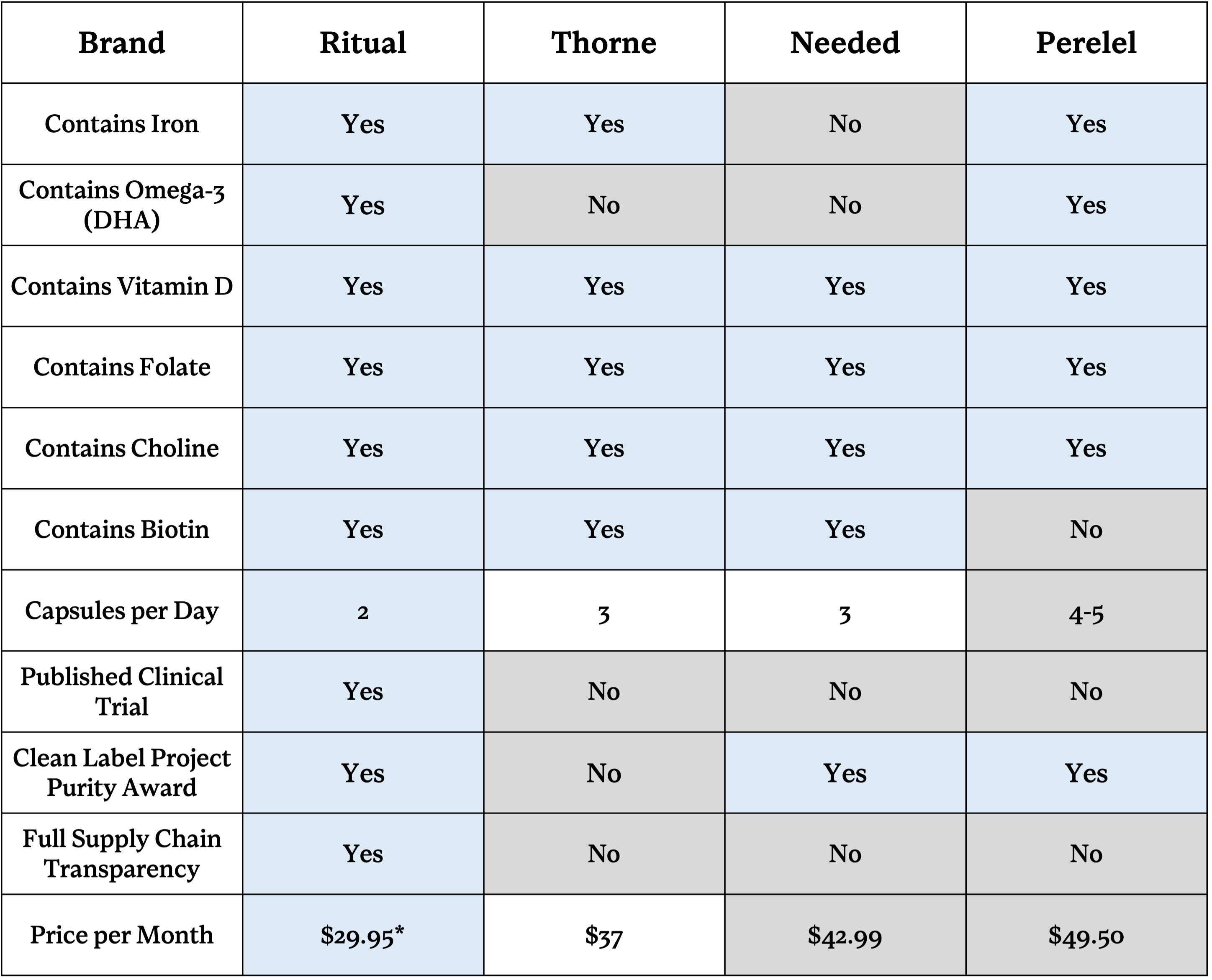
Ritual is the only leading prenatal backed by its own randomized controlled trial that was peer-reviewed and published in two peer reviewed journals.15 It was clinically proven to provide bioavailable folate, and help support metabolic demand, baby's bone health, and mom's cortisol levels.*† Needed conducted an IRB-approved observational study of which two abstracts are published, but it wasn't randomized. Thorne and Perelel have no published clinical research on their finished prenatal products on a pregnant population.
"A randomized clinical trial provides data about the efficacy of a supplement," Woods notes. "This is especially important for a prenatal because women's health is notoriously under-researched. Women deserve all the information they need to choose the best supplement."
Ingredients & Formulation: Ritual Wins With a Formulation That Covers Key Essential Nutrients
More is not always better when reviewing dosages or an ingredient list. “Certain nutrients compete for absorption, meaning you won’t benefit from their inclusion,” Woods explains. “For example, calcium and iron compete for absorption – if taken together in a supplement, calcium will prevent your body from absorbing iron.”
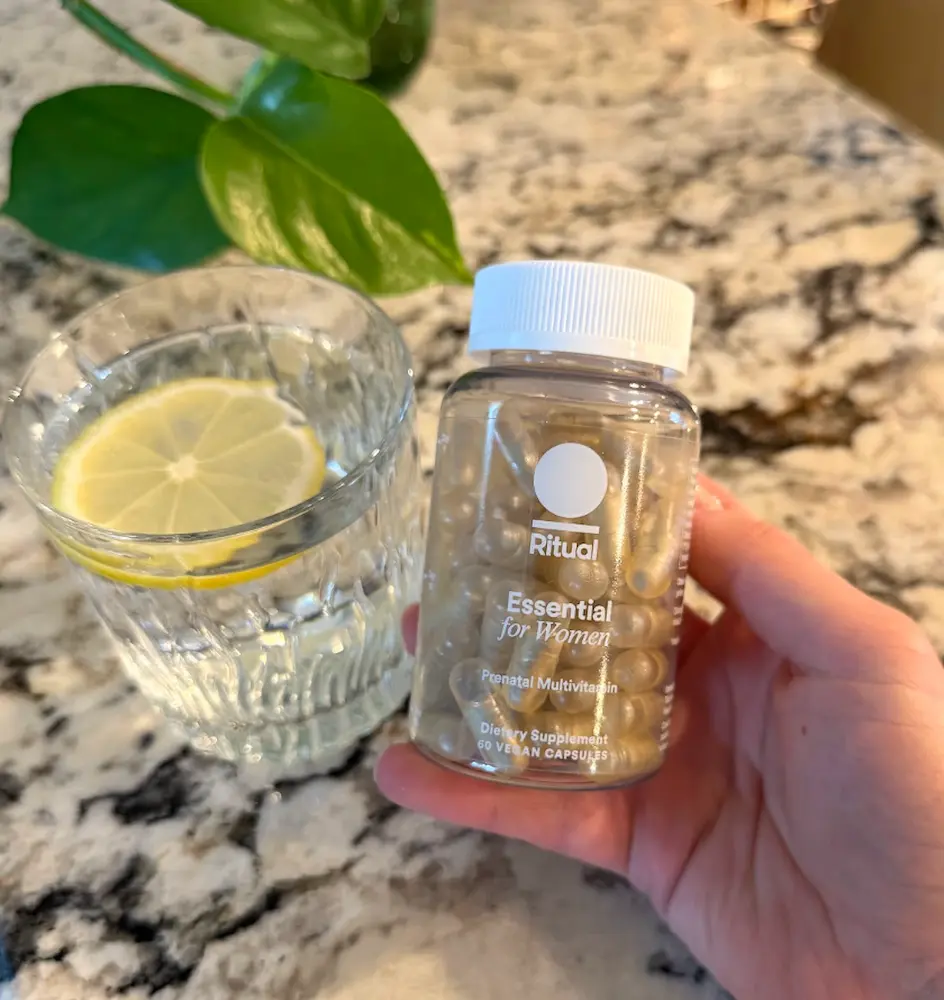
Ritual Essential Prenatal is the only formula we tested that covers all six key nutrients while deliberately limiting its ingredient list to 12 to prevent absorption conflicts. Using NHANES population data, a US-wide assessment of women's diets, Ritual takes a food-first approach to formulation: it fills the gaps diet tends to leave, while skipping nutrients most women already get enough of through food.10 That targeted approach is designed to give women only the nutrients they actually need while maximizing absorption. For example, Ritual contains no calcium, allowing for full potential absorption of iron, a key nutrient for helping red blood cells deliver oxygen to baby. "Ritual helps fill the gaps most commonly left by diet, in combinations designed to maximize absorption," Woods says.
Perelel's Trimester Prenatal Packs cover five of the six key nutrients, leaving out biotin, and the broader formula carries a higher risk of absorption conflicts. Perelel includes calcium and iron in the same pack, which can potentially reduce iron absorption.
Thorne Basic Prenatal also covers five of the six key nutrients and has the highest nutrient count of the group at 25, but it skips DHA entirely: a nutrient Woods calls “non-negotiable for fetal brain and eye development.” "Its formula also provides several B vitamins at amounts above the RDA for pregnancy”. Because individual nutrient needs can vary, higher amounts are not necessarily needed by everyone who is already meeting recommended intake levels."11
Needed Prenatal ranks last. It's missing two of the six key nutrients: no iron and no DHA. Pregnant women only get about 50% of the RDA for iron,12 and 15% of the RDA for DHA per day from diet,1 which means Needed lacks key ingredients that contribute to oxygen transport and baby's brain and eye development. Needed also provides 4000 IU of vitamin D per daily serving, which is the established Tolerable Upper Intake Level for adults. The Recommended Dietary Allowance for adults is 600–800 IU per day.
Safety & Third Party Testing: Ritual Wins With the Most Comprehensive Safety and Transparency Measures
Ritual holds the Clean Label Project Purity Award, screens for 200+ contaminants, and is the only brand in this review that publicly discloses full supply chain traceability: 100% of its active and other ingredients are traceable to their supplier and place of manufacture.
Perelel and Needed also hold the Clean Label Project Purity Award, but neither publishes full supply chain details. Thorne holds no Clean Label Project award and publishes no supply chain details.
Ease of Use & Tolerability: Ritual Wins with a Delayed-Release Design and High Tolerability
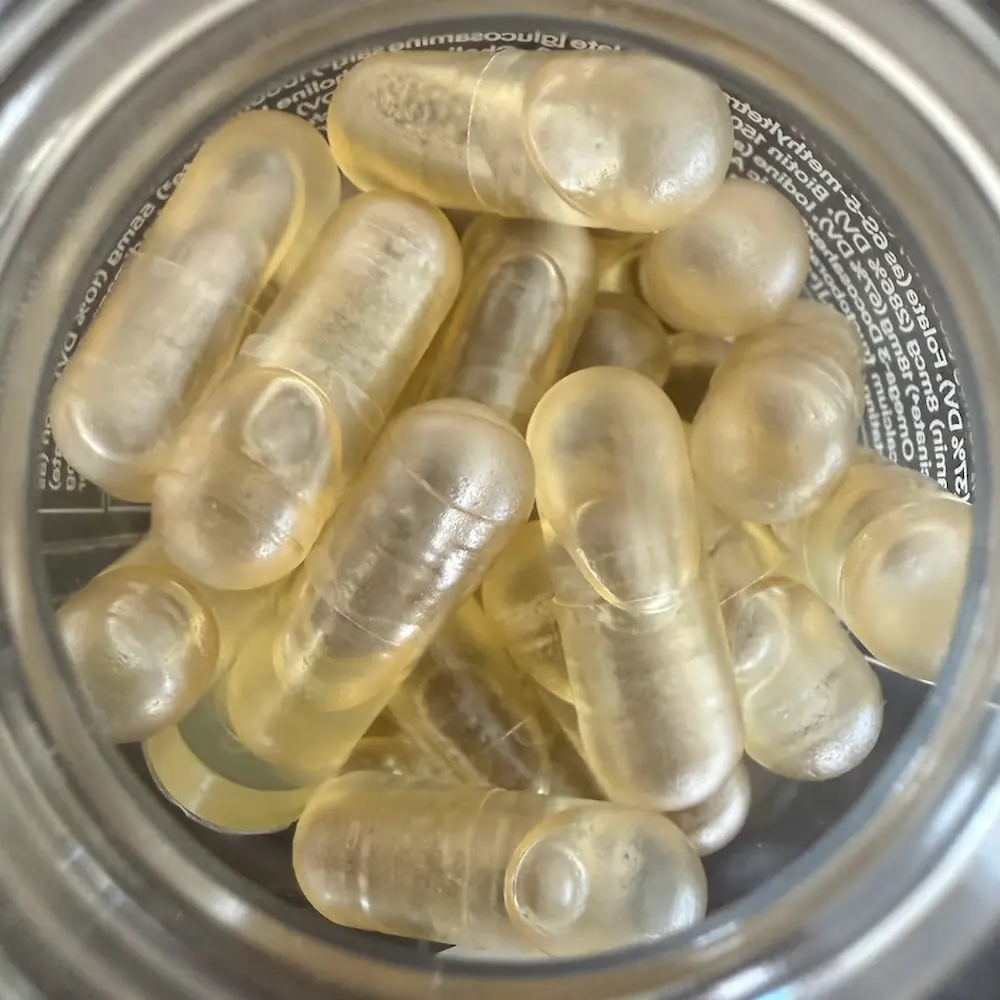
With just two capsules a day, Ritual asks the least of you and was our testers' favorite routine. For anyone dealing with morning sickness, it's also a big plus that you don't need to time it around meals: the patented delayed-release capsule works with or without food. Its iron comes in a chelated form (ferrous bisglycinate) designed to be easy on the stomach, and moms said the citrus-essenced scent tab and orange oil in the formula made it easy to take.*†
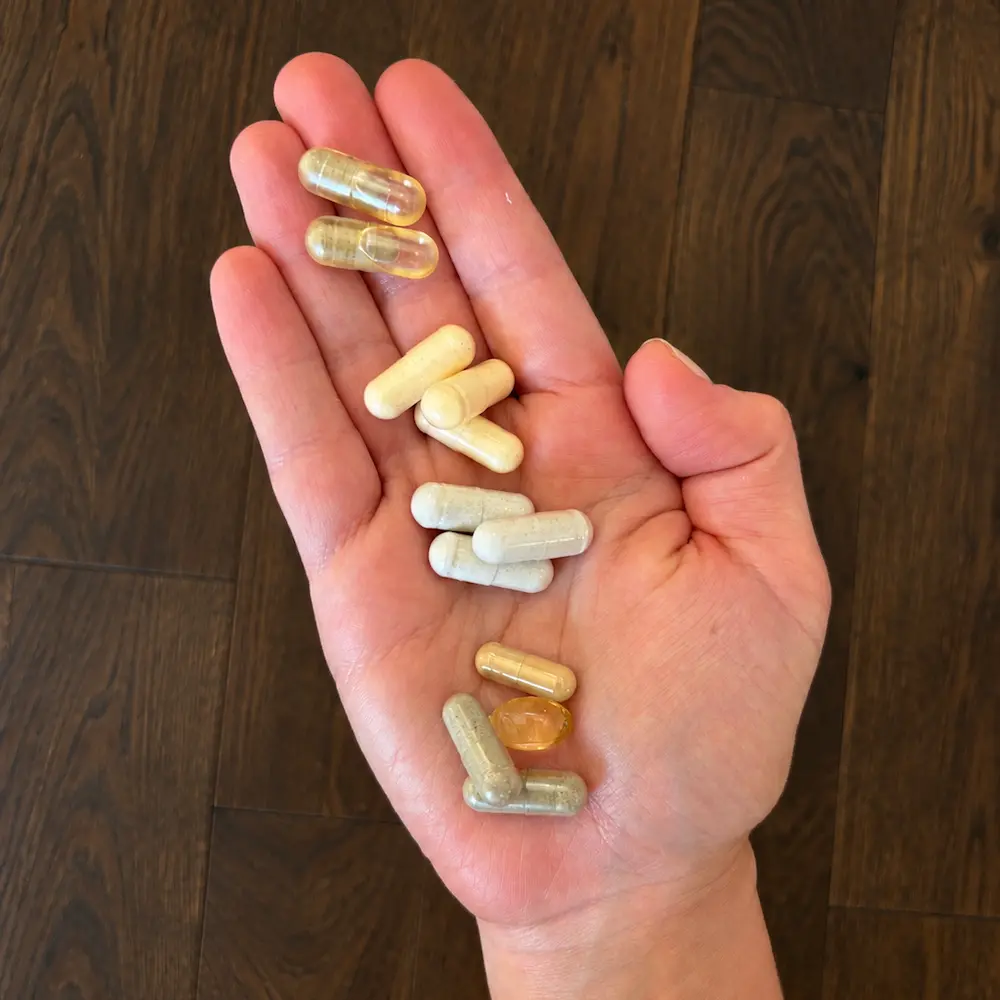
Testers found Thorne simple to take at three capsules a day, and it relies on the same gentle iron bisglycinate as Ritual. Needed also takes three capsules a day. To help mask the smell, it puts a citrus scent insert in the bottle rather than in the capsule itself. Testers appreciated the touch, but pointed out that it still means more capsules than Ritual, with no iron in the core formula.
Testers had the hardest time with Perelel. Its daily sachets contain 4–5 pills, which can make it a challenge to tolerate.
Price & Value: It’s a Tie Between Ritual and Thorne
Ritual Essential Prenatal comes in with the lowest price at $29.25 for the first month with Motherful’s discount ($39/month after), with Thorne Basic Prenatal coming in at a similar monthly investment of $37/month. Needed Prenatal and Perelel Trimester Prenatal Packs are more expensive at $42.99/month and $49.50/month respectively.
Our Clear Winner for Prenatal Vitamins: Ritual Essential Prenatal
Ritual is the clear choice if clinical validation, tolerability, ingredient transparency, and cost top your list. No other leading prenatal in this review has a published clinical trial behind it, and Ritual's practical, evidence-based formula is built to maximize absorption while helping fill the nutrient gaps common in pregnancy.
Our Registered Dietitian agrees. "I recommend Ritual," says Woods. "It's all about meeting expectant mothers' needs, with extra steps of third-party testing and a clinical trial to prioritize safety and transparency."

Ready to try Ritual?
References
- FDA regulation
- Vitamin D
- Vitamin D deficiency
- Folate
- Folate deficiency
- Pregnancy nutrients
- Anemia
- Biotin
- Omega-3 during pregnancy
- Nutrient deficiency in pregnant women
- Excess B vitamins
- Iron intake
- NHANES data on DHA
- ACOG safe recommendation
- Ritual clinical trial
* These statements have not been evaluated by the Food and Drug Administration. This product is not intended to diagnose, treat, cure, or prevent any disease.
†Based on a 24-week, randomized, double-blind, controlled clinical trial on 62 second and third trimester pregnant women.